Tracking call for papers review progress means knowing, at any point, how many submissions have been reviewed, which are still waiting, and which reviewers are behind. It's the difference between a committee meeting with complete scores and one spent waiting on the last reviewers.
Most teams find out review is behind too late, usually the week of the deadline, from a spreadsheet someone exported the Friday before. By then, the only options are extending the deadline or making decisions on incomplete scores. This guide covers what to track, how often, and what to do when review slips.
What should you track during abstract review?
Five numbers tell you whether review is on schedule:
- Completion rate: reviews done compared with reviews assigned, overall and by track
- Submissions with no reviews yet: the ones most at risk on deadline day
- Submissions below your minimum: for example, abstracts that need two reviews but have one
- Reviewer progress: how far each reviewer has got through their assignments
- Days to deadline: compared with the share of work left
Watch scoring patterns, too. A reviewer who has given every abstract the same score needs a word now, not an adjustment later. Our guide to calibrating abstract reviewers covers how to spot and fix that.
How often should you check review progress?
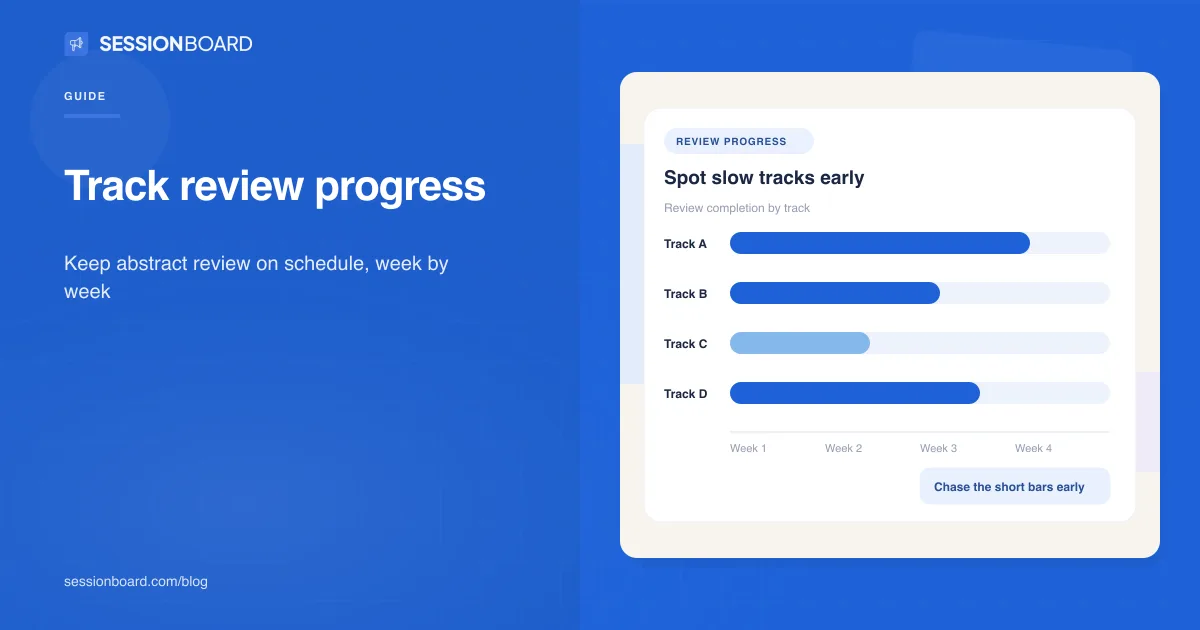
Weekly from the day review opens, and more often in the final week. A useful rule of thumb is a straight line: if review runs four weeks, a quarter of the work should be done by the end of week one, half by the end of week two, and so on. When completion falls below that line, act early, while a reminder is still enough.
Share the same live view with your committee chair. A chair who can see progress by track can nudge their own reviewers, which works better than staff chasing everyone.
How do you get late reviewers to finish?
Start by making it easy. Reviewers are often volunteers with full-time jobs, so a portal they open from an emailed link, with only their assignments on screen, removes most of the friction.
Then remind in steps: a friendly note at the halfway point, a specific one in the final week ("you have six abstracts left"), and a direct message from the committee chair to anyone still behind two days out. If a reviewer can't finish, reassign their remaining abstracts early rather than on deadline day.
Capping assignments helps before any of this. A reviewer with 15 abstracts finishes. A reviewer with 60 often doesn't.
What should you do if review falls behind?
First, find where it's stuck. Delays usually sit with a few reviewers or one track, not the whole committee. Reassign from those reviewers to ones who finished early, and focus on the submissions below your minimum number of reviews.
If you must extend, extend once, by a set number of days, and tell reviewers exactly what's left for them. An open-ended extension tends to recreate the same problem a week later.
How do you report review progress to leadership?
Keep it to three numbers: overall completion rate, submissions still below the minimum and days to the decision meeting. Add a single line on any track at risk. A live dashboard link means leadership checks when they want to, and you skip the weekly status email.
Tracking review progress in Sessionboard
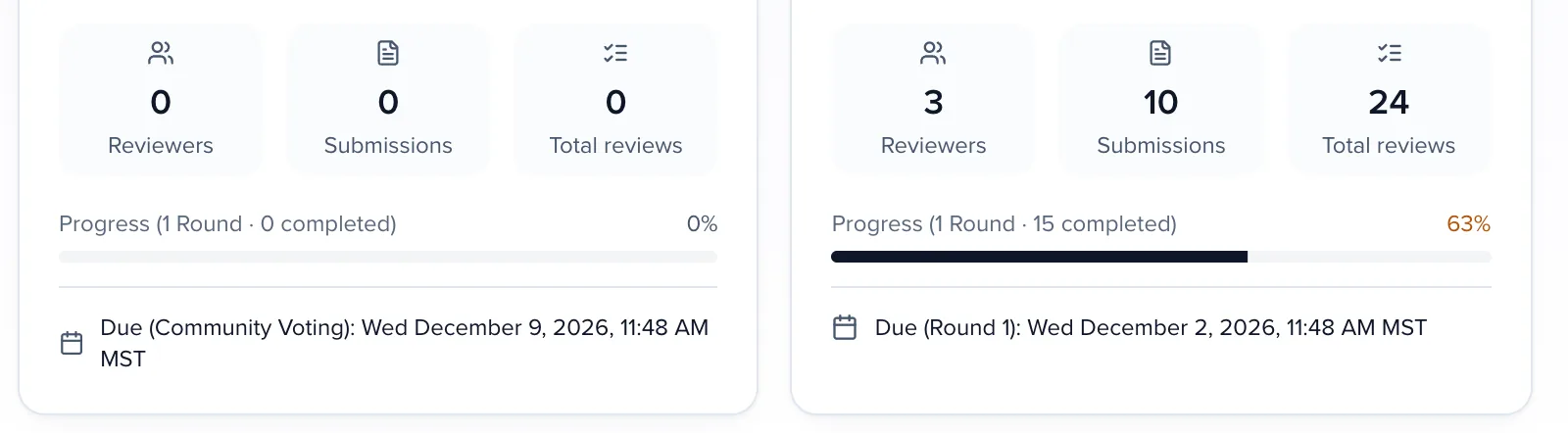
In Sessionboard's Call for Papers & Grading, program chairs see review progress and completion rates live, and reviewers score from a dedicated dashboard they open by magic link. You can assign reviewers by tag or track and cap reviews per reviewer and per submission. Sessionboard's reporting includes a live list of all submissions pending review, and dashboards can be shared with your committee through a public link.
How to track call for papers review progress, answered
How do you track abstract review progress?
Track the completion rate overall and by track, submissions with no reviews yet, submissions below your minimum number of reviews and each reviewer's progress, then compare them with the days left before your deadline.
How often should you send reviewer reminders?
At the halfway point, again in the final week with the number of abstracts left, and a direct note from the committee chair two days before the deadline to anyone still behind.
How many abstracts should each reviewer get?
It depends on your timeline and abstract length, but cap assignments so no reviewer has more than they can realistically finish. Smaller, even loads finish on time more often than a few heavy ones.
What do you do when reviewers miss the deadline?
Reassign their remaining abstracts to reviewers who finished early, prioritizing submissions below your minimum number of reviews. If you need to extend, extend once by a set number of days.
Should the committee chair see review progress?
Yes. A chair who can see progress by track can follow up with their own reviewers, which is usually more effective than staff reminders alone.
What's the best way to report review status to leadership?
Three numbers: overall completion rate, submissions below the minimum and days to the decision meeting, ideally on a live dashboard they can open themselves.
Chasing reviewers through spreadsheets? See how Sessionboard keeps review progress visible to your whole committee. Request a demo →