Non-dues revenue is any income an association earns outside membership dues: meetings, education, sponsorship, publications and more. Your annual meeting already produces one of the richest sources of it: the sessions, posters, and recordings your members created, but most associations stop earning from that content the day the meeting ends.
The recordings sit in a folder. The posters come down with the easels. Next year, the program team starts again from a blank call for papers. This guide covers practical ways to keep conference content earning after the meeting, and what has to be in place for each one to work. For the wider case, see our companion piece on non-dues revenue hiding in your session recordings.
Why is conference content a non-dues revenue opportunity?
Because the hardest part is already done. Your committee sourced the topics, reviewed the abstracts, and selected the best work in your field. Speakers prepared and delivered it. Turning that content into a product costs far less than creating new education from scratch, and it reaches members who couldn't travel to the meeting.
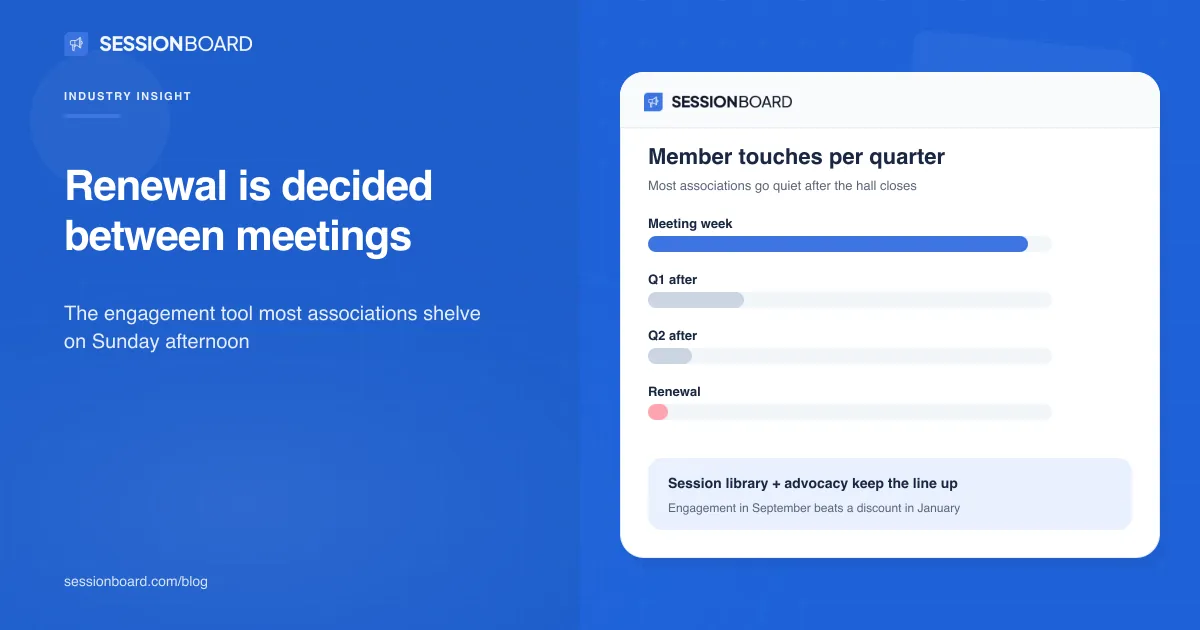
It also extends the value of attending. Members who registered get continued access, and members who didn't have a reason to buy.
What are the best ways to earn non-dues revenue from conference content?
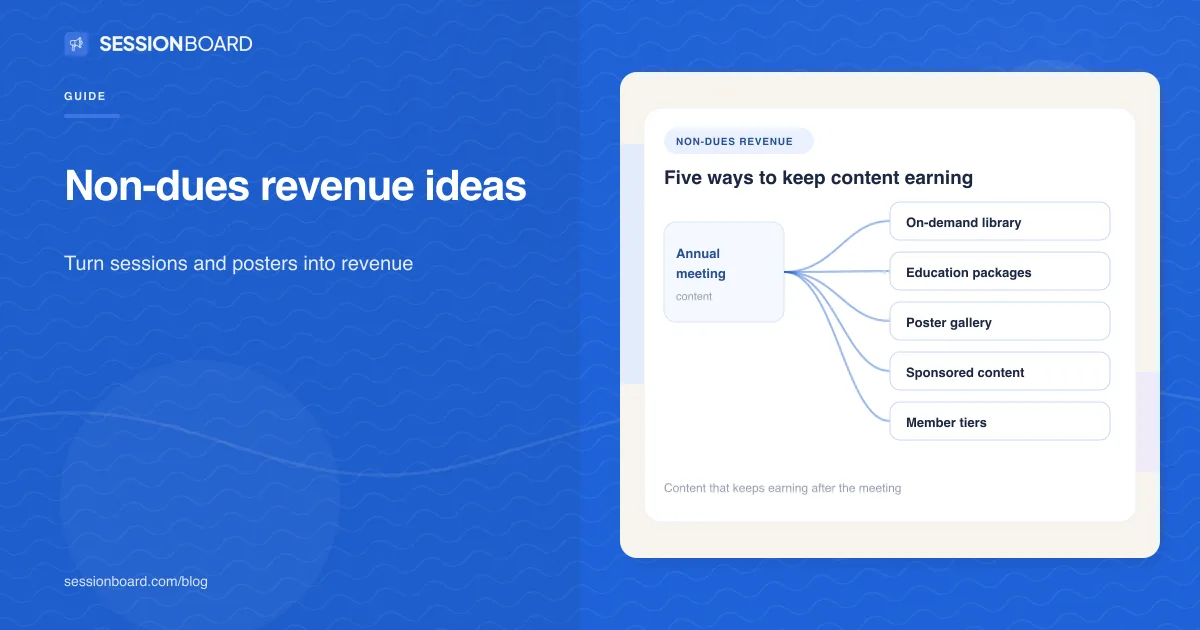
Five models work well for associations:
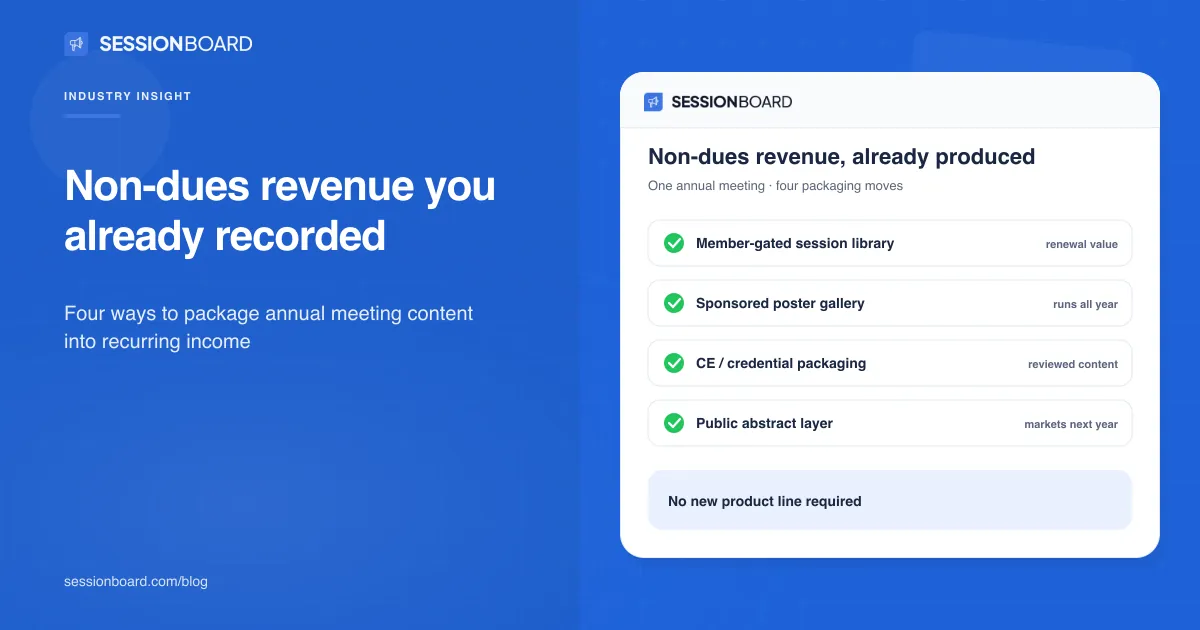
- On-demand session library: sell access to recorded sessions after the meeting, to non-attendees or as an add-on
- Year-round education packages: bundle related sessions into a course or topic series
- Online poster gallery: keep accepted posters available after the meeting, with sponsored placement
- Sponsored content: let sponsors underwrite a track, a series, or the library itself
- Member value tiers: include content access in a higher membership tier
You don't need all five. Start with the one your members already ask for.
How do you price an on-demand session library?
Most associations price in two ways: a discount or free access for registered attendees, and a separate price for everyone else. Members usually pay less than non-members. Keep the offer simple at first: a single library price for the year, and add bundles once you see which sessions sell.
Timing matters. Interest is highest in the weeks right after the meeting, so plan the library before the meeting, not after. That means getting speaker recording permissions at submission and publishing quickly.
Can posters generate non-dues revenue?
Yes, though it's usually indirect. Printed posters disappear after the session, but an online poster gallery keeps that research visible for months. That gives you sponsorship inventory, such as a sponsored gallery or category, and adds value to an on-demand package. Our guide to running a poster session covers how to plan posters with the gallery in mind.
How do sponsors fit into conference content?
Sponsors want reach and association with trusted content. A sponsored track, an underwritten session series, or a branded on-demand library gives them exposure that lasts beyond three days on the exhibit floor. Keep the line clear between sponsorship and editorial selection: sponsors support the content, the committee chooses it.
What needs to be in place before you sell conference content?
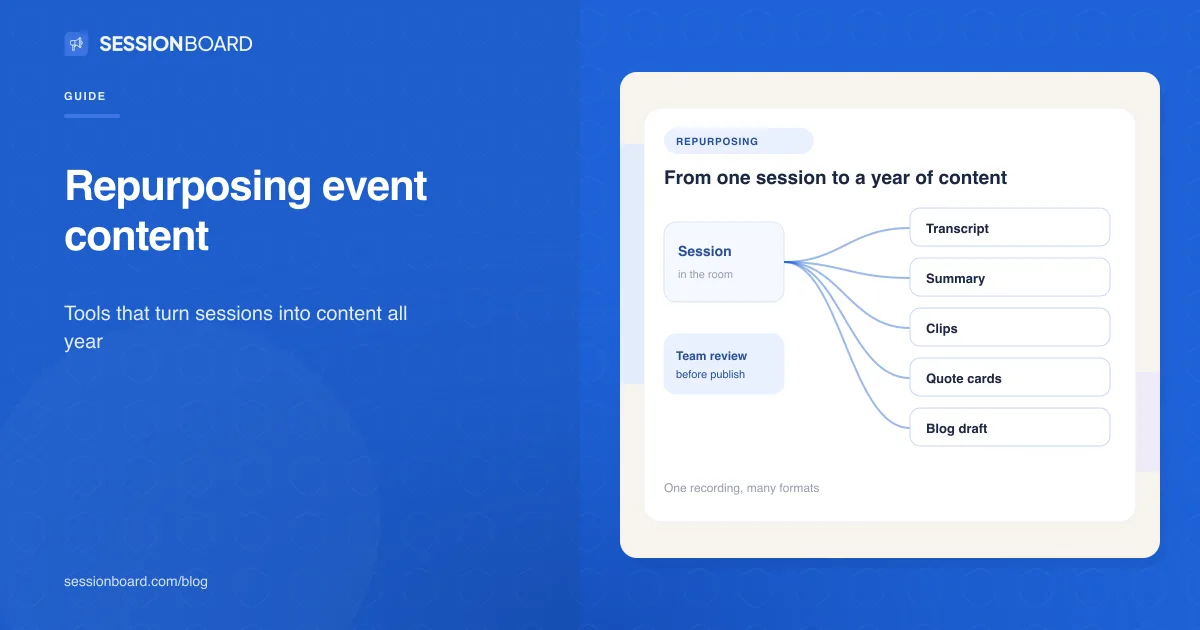
Three things. First, permissions: speaker and author consent to record and distribute, collected at submission. Second, organized content: sessions, abstracts, speakers and recordings tagged by topic so you can package them. Third, a plan for repurposing, so content goes out in weeks rather than months. Our guide to repurposing conference sessions covers the workflow.
Track results the same way you track the meeting itself. Event program KPIs such as session attendance and ratings help you choose what to package first.
Managing conference content in Sessionboard
Sessionboard keeps abstracts, sessions, speakers and content in one place from the call for papers through the meeting, so the content you'd package after the meeting is already organized by track and topic. Sessionboard Posters publishes accepted posters in a branded online gallery attendees can browse during and after the meeting.
Non-dues revenue ideas from your conference content, answered
What is non-dues revenue?
Non-dues revenue is income an association earns outside membership dues, such as meetings, education, sponsorship, publications and advertising.
How can associations earn non-dues revenue from their annual meeting content?
By packaging sessions, recordings, and posters into products members and non-members can buy after the meeting, such as an on-demand library, education packages or sponsored content series.
Should registered attendees get free access to session recordings?
Many associations include access for registered attendees and charge non-attendees. It rewards attendance and gives members who couldn't travel a reason to buy.
When should you plan an on demand library?
Before the meeting. Collect recording permissions at submission and plan to publish within weeks, while interest is highest.
Can sponsors fund conference content?
Yes. Sponsors can underwrite a track, a session series, an online poster gallery or the on demand library, as long as the committee keeps control of content selection.
What content sells best after a conference?
Sessions on practical, in demand topics and sessions with high ratings at the meeting. Use your session attendance and survey data to choose what to package first.
Want your conference content organized and ready to package after the meeting? See how Sessionboard connects your program from call for papers to content. Request a demo →