Enterprise content marketing for events: the complete guide (2026)

In this series
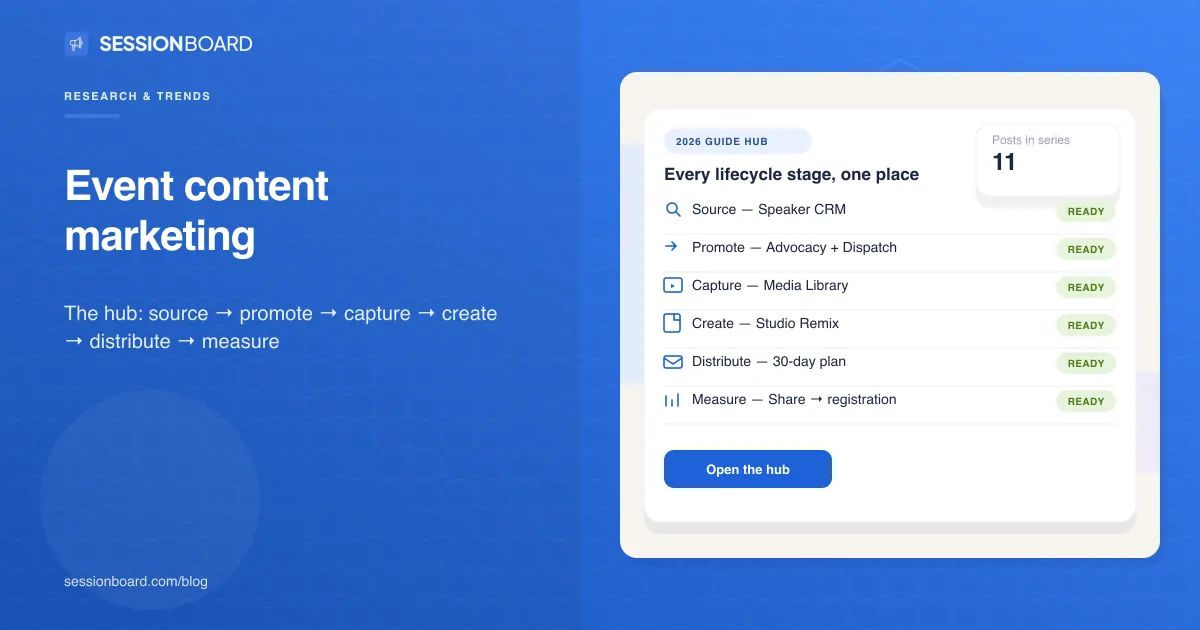
This is the hub for enterprise content marketing , one connected record of sessions, speakers, and content across your events. Each stage has a dedicated post. Bookmark this page or share it with marketing and program leads planning the next cycle.
| Stage | Read next |
|---|---|
| Hub | Complete guide (2026) |
| Platform | Platform overview · Content graveyard · Connect your stack |
| Source | Speaker CRM |
| Promote | Speaker advocacy · Dispatch |
| Capture | AI transcription · Media Library |
| Create | Studio Remix · Repurpose sessions |
| Distribute | 30-day plan · Attendee Hub |
| Measure | Content marketing ROI |
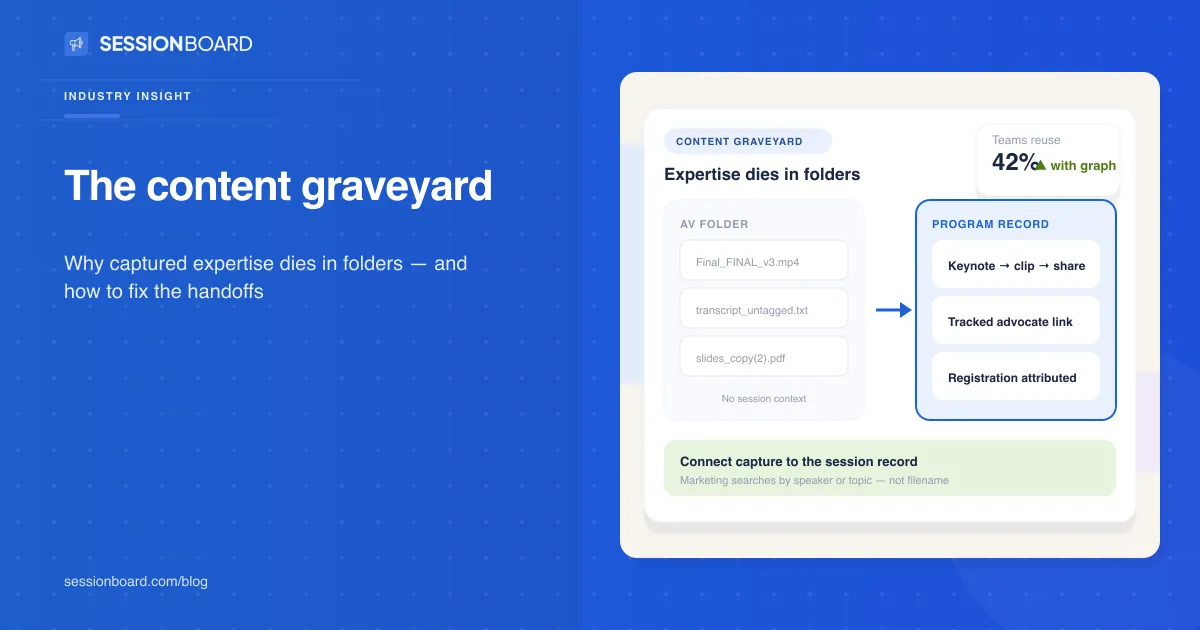
The content graveyard problem
Expertise lives in rooms, then disappears into:
- AV exports with wrong filenames
- Transcripts without session or speaker tags
- Slides that never match the learning objectives in the abstract system
- Advocate emails with no tracked links
Fixing the graveyard is not more cameras , it is context: every asset tied to session, speaker, topic, and event.
Stage 1 : Source: find experts in your data
Your next keynote may already be in Speaker CRM , a faculty member who spoke two years ago, a sponsor SME, an employee presenter.
Read next: Speaker CRM: find the expert already in your data
Stage 2 : Promote: grow registration
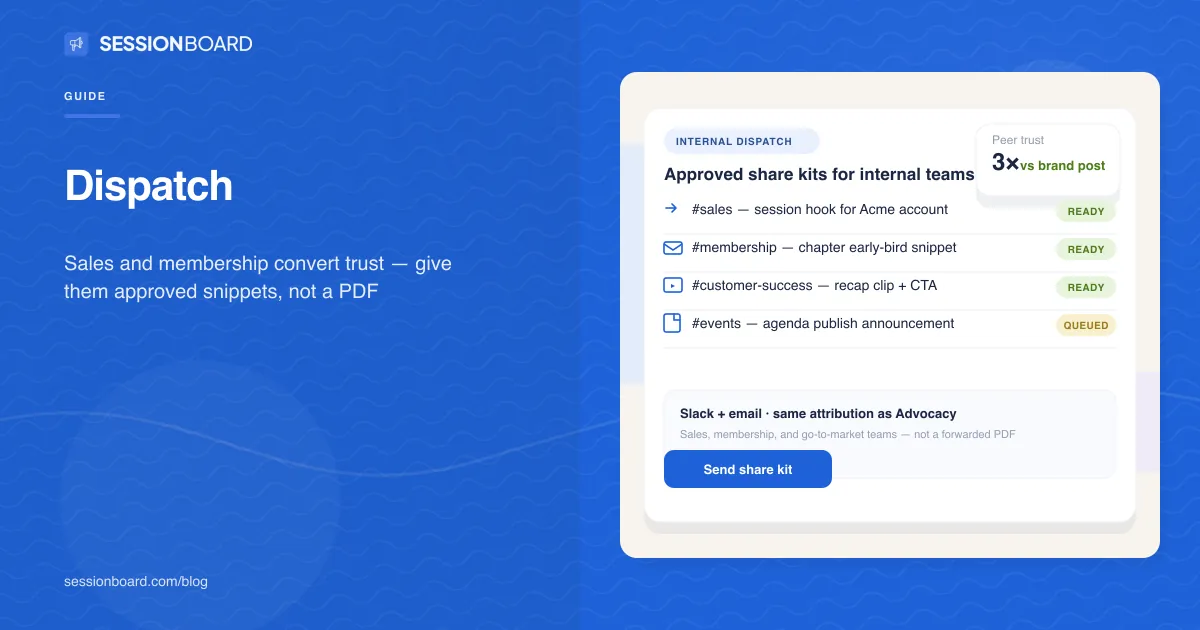
External advocates (speakers, sponsors, exhibitors) and internal teams (sales, membership, go-to-market teams) need different assets , all with attribution.
Read next: Speaker advocacy for events · Dispatch: internal teams as promoters
Stage 3 : Capture: preserve knowledge
Live transcription and Media Library attach words and media to the session record , searchable before marketing asks for a clip.
Read next: AI event transcription for organizers · Event Media Library and the content library
Stage 4 : Create & Remix: campaign assets
One session becomes clips, quote cards, social posts, emails, and summaries , on-brand, personalized per advocate.
Read next: Turn one session into every format
Stage 5 : Distribute: plans, not blasts
A 30-day content plan beats a single post-event email. Match assets to milestones before, during, and after the event.
Read next: Build a 30-day content plan from your event
Stage 6 : Measure: prove ROI
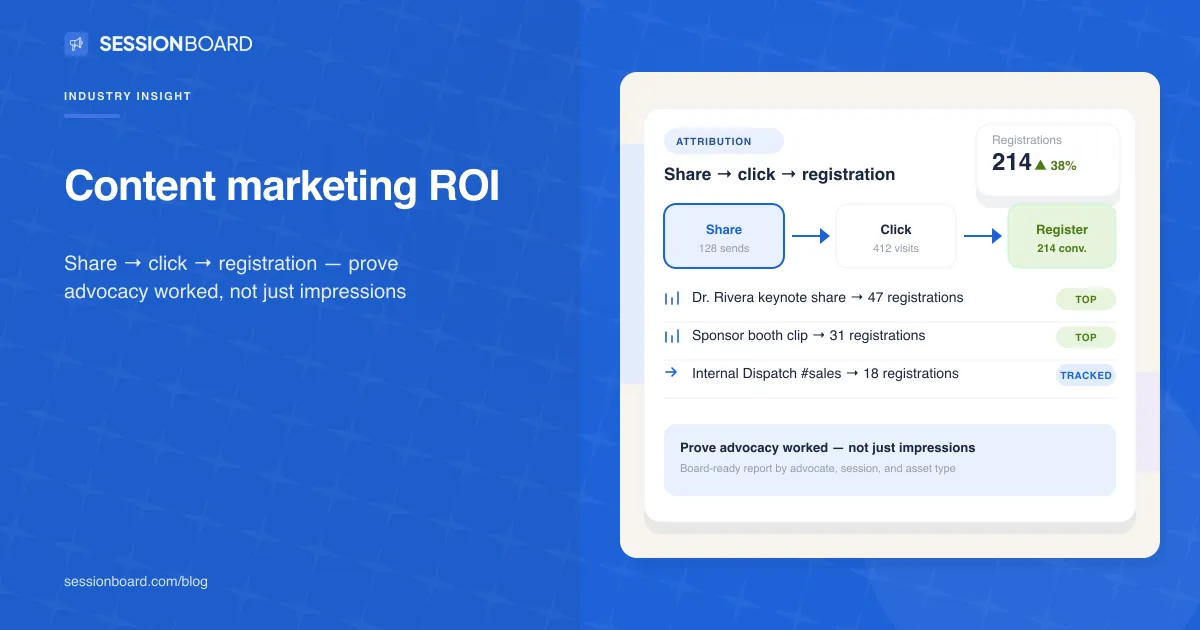
Shares without registration attribution fail the board conversation. Connect advocacy, content, and pipeline on one report.
Read next: Event content marketing ROI
Open architecture
Read next: Event content marketing without replacing your registration stack · Attendee Hub without rebuilding your site
Enterprise content marketing for events, answered
What is enterprise content marketing for events?
A disciplined approach to sourcing experts, promoting programs, capturing sessions, creating reusable assets, distributing through advocates, and measuring impact , treating each event as a content factory, not a one-off production.
What is the content graveyard?
The pile of recordings, transcripts, and slides that never become campaign assets because they sit outside the program record , disconnected from speakers, sessions, and attribution.
What stages should an event content lifecycle include?
Source (experts), Promote (audience growth), Capture (transcripts and media), Create & Remix (clips and posts), Distribute (advocates and plans), and Measure (registrations and engagement tied to content).
Do we need to replace our registration platform?
No. The program and content layer sits beside registration and webinar tools, connecting session metadata and advocate attribution without replacing your registration stack.
Related reading
- Introducing the platform
- The content graveyard
- Speaker advocacy for events
- AI event transcription
- Event content marketing solution
- Cvent content management
Share on LinkedIn? Lead with the quick answer above , it is written to stand alone when pasted with the link.