The content graveyard: why most event expertise never gets reused

The situation
You spent six figures on production. Faculty delivered breakthrough sessions. Attendees filled feedback survey forms. Then Monday arrived and marketing opened a folder named Final_FINAL_revised2.
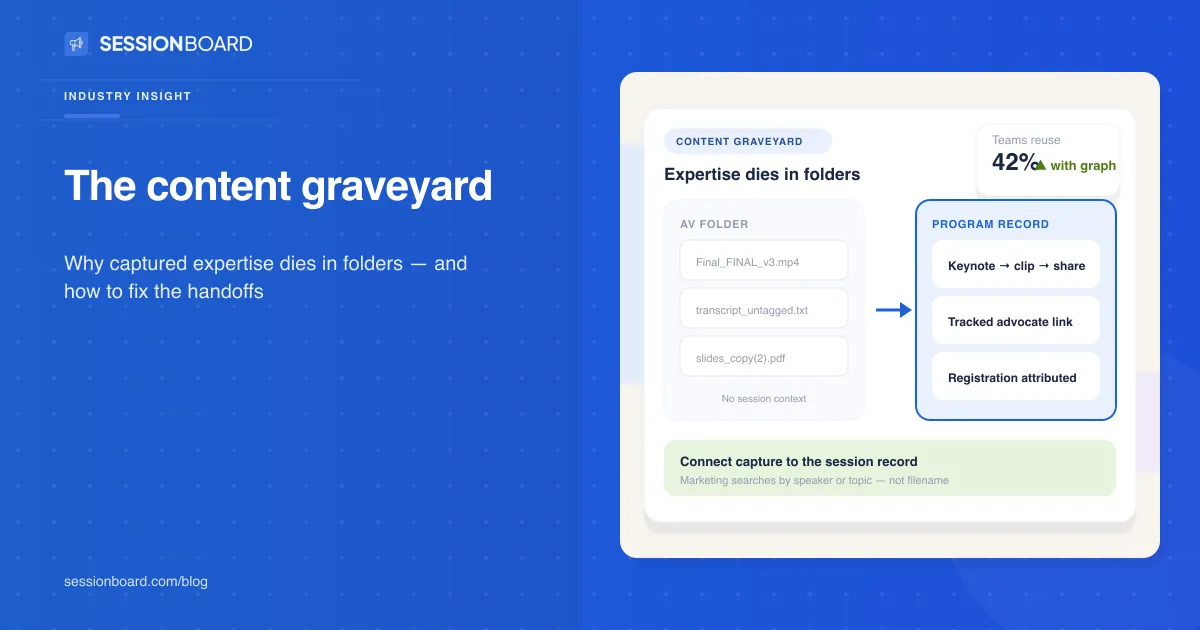
That pile is the content graveyard , not because teams are lazy, but because nothing in the pile knows what session it came from, who said it, or which campaign it belongs to.
Industry conversations consistently surface the same pattern: most teams repurpose less than half of what they capture; nearly half still lack a repeatable activation process. The waste is structural.
An association stores last year's keynote in a chapter Dropbox. A corporate team loses the customer panel recording when the webinar vendor contract ends. A trade show producer has forty education sessions on camera , and zero tagged for next year's promotion cycle.
Quick answer
The content graveyard , The event content graveyard is captured expertise disconnected from the program record , recordings and transcripts marketing cannot find or attribute. Teams fix it by binding capture, create, distribute, and measure to sessions and speakers on one lifecycle instead of AV folders and spreadsheets.
In this series
Problem , content graveyard , part of the Enterprise Content Marketing guide (2026). Cross-links below so you can jump to the stage before or after this one.
| Stage | Read next |
|---|---|
| Hub | Complete guide (2026) |
| Platform | Platform overview · Content graveyard · Connect your stack |
| Source | Speaker CRM |
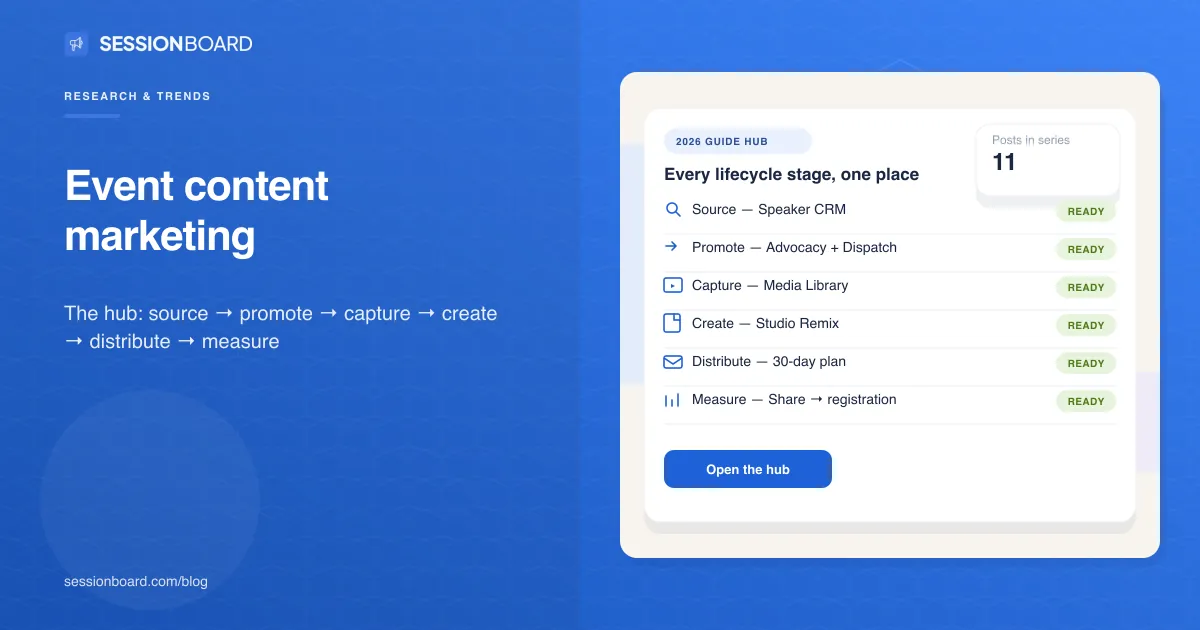
| Promote | Speaker advocacy · Dispatch |
| Capture | AI transcription · Media Library |
| Create | Studio Remix · Repurpose sessions |
| Distribute | 30-day plan · Attendee Hub |
| Measure | Content marketing ROI |
What breaks
- Capture without context , Transcripts exist but lack speaker, track, and learning-objective tags from the abstract system.
- Create without source , Designers rebuild titles and quotes from memory because metadata never traveled.
- Distribute without attribution , Generic event banners go out; leadership asks which post drove registration and nobody can answer.
- Measure without linkage , Impressions in one tool, registrations in another, session quality in a third.
Each handoff adds friction until reuse costs more than a fresh Canva template.
What good looks like
The graveyard dissolves when one connected record holds:
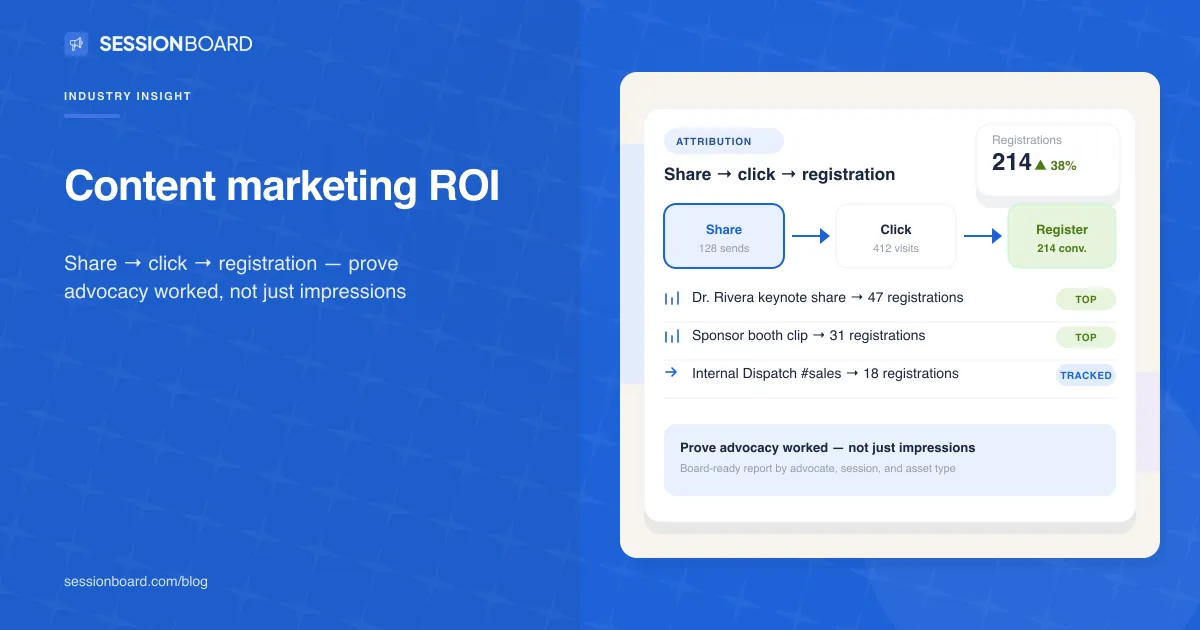
- Session acceptance → scheduled slot → capture → transcript → clip → advocate share → registration
Marketing searches by speaker or topic, not by filename. Advocates get clips from their session, not a stock photo. Leadership sees which experts and themes compound year over year.
How teams escape the graveyard
Sessionboard's Enterprise Content Marketing Platform connects the lifecycle on the program record you already run:
- Capture : transcription and Media Library on the session record
- Create & Remix : Studio outputs tied to timestamps and speakers
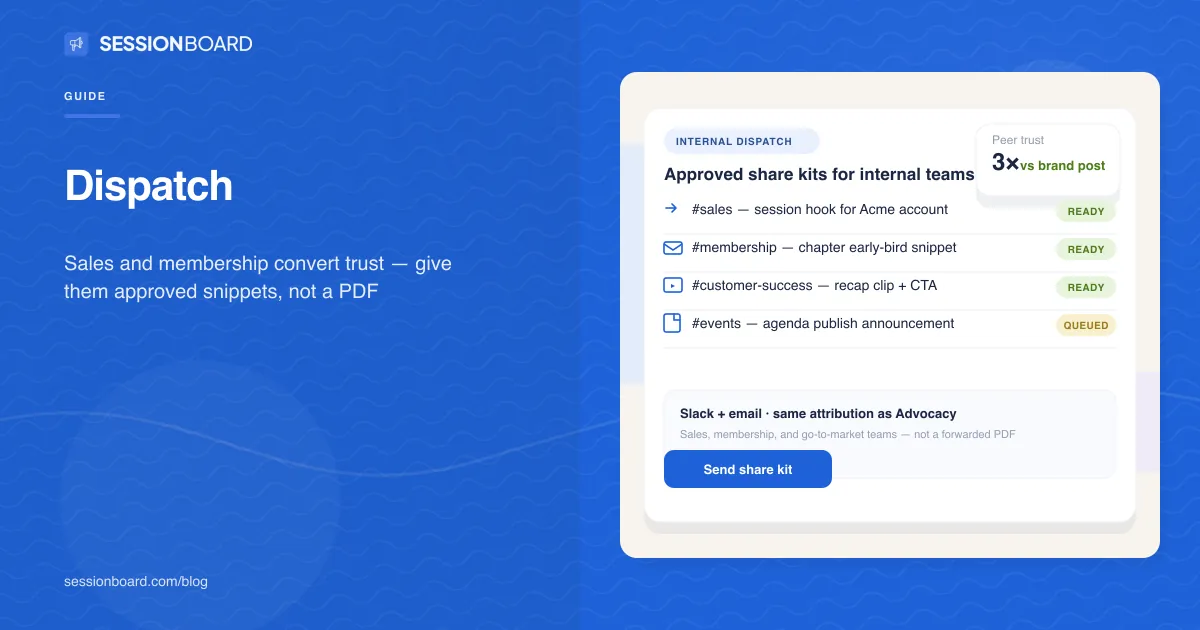
- Distribute : Advocacy and Dispatch with tracked links
- Measure : reporting from share to registration
You do not need another DAM that ignores sessions. You need context.
Full framework: Enterprise content marketing guide (2026)
The content graveyard, answered
What is an event content graveyard?
Recordings, transcripts, and slides stored without ties to sessions, speakers, or campaigns , so marketing cannot find, remix, or attribute them, and next year's team starts from scratch.
Why do teams repurpose so little event content?
Handoffs: AV delivers files, program owns metadata, marketing owns channels , none share one connected record. Without context, reuse costs more than creating net-new generic posts.
How do you fix the content graveyard?
Connect capture to the program record , session, speaker, topic, event , then automate create, distribute, and measure so assets compound instead of expiring in folders.
Related reading
- Enterprise content marketing guide (2026)
- Event Media Library
- Studio Remix
- Event content marketing ROI
- Repurpose conference sessions
Share on LinkedIn? Lead with the quick answer above , it is written to stand alone when pasted with the link.