Templates

Speaker bio template

Fill-in bio structures at 50, 100, and 200 words, plus the moderator intro version.
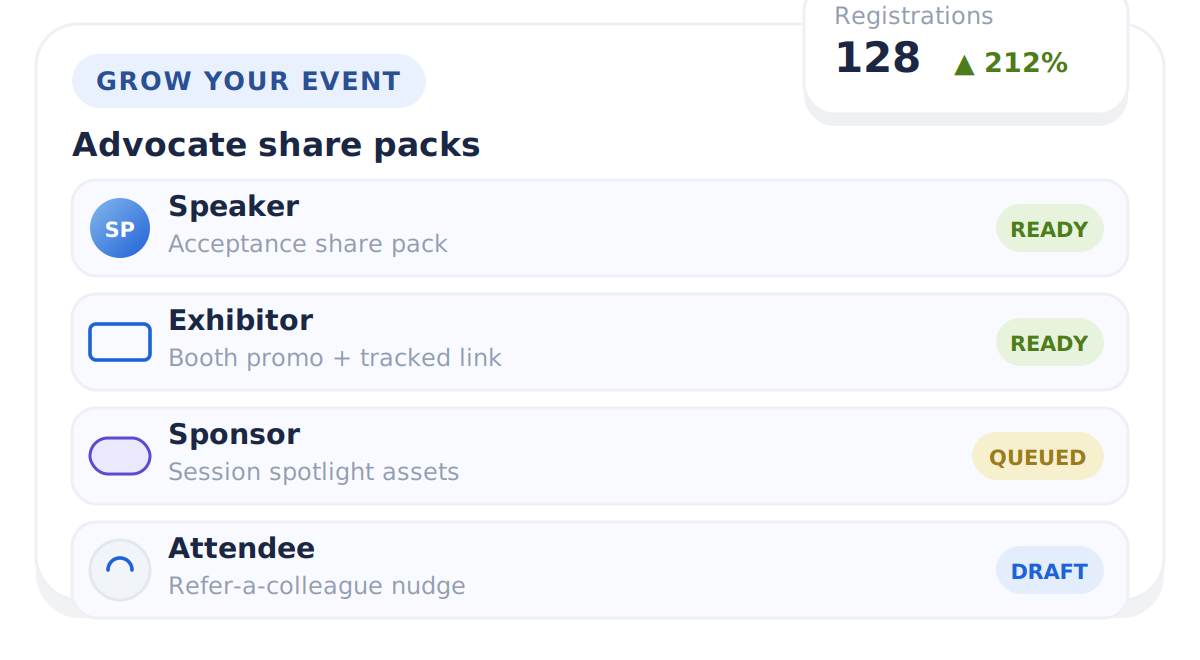

Grow your event with speakers, exhibitors, sponsors, and attendees as advocates
Trusted by teams running Informa, FT Live, medical societies, and global enterprises
Informa
Clarion Events
Financial Times
Dynatrace
ACEP
AVIXA
NACD
ASHG
American Society of Anesthesiologists
Google
Docebo
NRECA
CyberRisk Alliance
AdventHealth
Questex
IAAPA Expo
NAEYC
Informa
Clarion Events
Financial Times
Dynatrace
ACEP
AVIXA
NACD
ASHG
American Society of Anesthesiologists
Google
Docebo
NRECA
CyberRisk Alliance
AdventHealth
Questex
IAAPA Expo
NAEYC

Quick answer

Events need speaker bios at three lengths: ~50 words for the program book grid, ~100 for the website and app, and ~200 for keynote pages — plus a spoken moderator intro that is shorter than all three. The strongest structure is relevance first (why this person on this topic), credentials second, human detail last. Collect bios structured at acceptance, not as prose attachments in email.

50-word bio — program book & session cards

Fill in the brackets; cut anything that doesn't earn its words at this length.

  1. [Name] is [title] at [organization], where [she/he/they] [one-line description of what they actually do].
  2. [First name] [is the reason they're on this stage: led X, built Y, published Z — one concrete claim].
  3. [Optional closer: board role, credential, or the one detail attendees will remember.]

100-word bio — website & mobile app

The 50-word structure plus proof and a human line.

  1. Open with the 50-word core: name, role, organization, and the one-line what-they-do.
  2. Add the relevance sentence: the specific work, research, or program that makes them the right person for this session's topic.
  3. Add one proof point with a number where honest: patients treated, programs run, publications, teams led, years in the field.
  4. Add one credential line: degrees, board certifications, fellowships — the ones this audience respects, not all of them.
  5. Close with one human detail — city, side project, or what they'd talk about at the reception. This is the line people mention.

200-word bio — keynote & featured speaker pages

Same skeleton, expanded — not a CV dump.

  1. Paragraph 1: who they are and the through-line of their career, framed around the topic they're keynoting.
  2. Paragraph 2: the work — two or three concrete achievements with numbers and dates, in the order this audience cares about.
  3. Paragraph 3: recognition and roles — awards, boards, publications; keep it to the top three.
  4. Paragraph 4: the human close — what drives them, one personal line, and where they're based.
  5. Rule: every sentence answers 'why should I attend this session' — anything that only proves seniority gets cut.

Moderator intro — the spoken version

Never read the written bio aloud. The intro is 30 seconds, built for the room.

  • One sentence of relevance: 'Our next speaker spent ten years doing exactly what this session is about.'
  • One concrete credential — the single most impressive, not the full list
  • The session title, said exactly as printed, so the room connects it to their agenda
  • The name last, as the applause cue: '…please welcome [name].'
  • Check pronunciation with the speaker beforehand and write it phonetically on the card

What event teams should collect (structured, at acceptance)

  • Bio at the lengths you'll publish — or one 200-word master the system trims with the speaker's approval
  • Headshot with minimum resolution stated (1200px+), not 'a photo'
  • Name as it should print, with credentials and pronunciation
  • Title and organization exactly as they should appear — job titles change between acceptance and show
  • Disclosure and consent fields where CE or recording applies, in the same form, not a second ask
  • Social handles for promotion assets — collected once, used by marketing and advocacy tooling

Frequently asked questions

Three standard lengths cover almost every surface: about 50 words for program book grids and session cards, about 100 for the website and mobile app, and about 200 for keynote or featured pages. Write the longest honestly and trim down; padding upward shows.

Relevance first — why this person on this topic — then role and organization, one or two concrete proof points, the credentials this audience respects, and one human detail. Cut anything that only proves seniority without connecting to the session.

Third person for everything the event publishes — program, website, app, and the moderator's mouth. First person only in spaces the speaker owns, like their own LinkedIn. Collect it in third person to avoid rewriting.

A single-page speaker summary — bio, headshot, topics, talk titles, and contact — used to pitch and book speaking slots. Event teams see them inbound from speakers and bureaus; the bio sections above drop straight into one.

Structured, at acceptance, in the same flow as headshot, AV needs, and disclosures — with lengths and photo specs stated. Free-text email collection produces three versions of every speaker and a chase cycle before every print deadline.

The CV dump — a chronological list of titles that never says why this person is on this stage. The fix is one relevance sentence at the top; the rest of the bio supports it or gets cut.

Collect bios once, on the speaker record

Talk through your event workflow — abstracts, speakers, content, and marketing on one program graph.

Loading form…