
July 27, 2026

10
min read


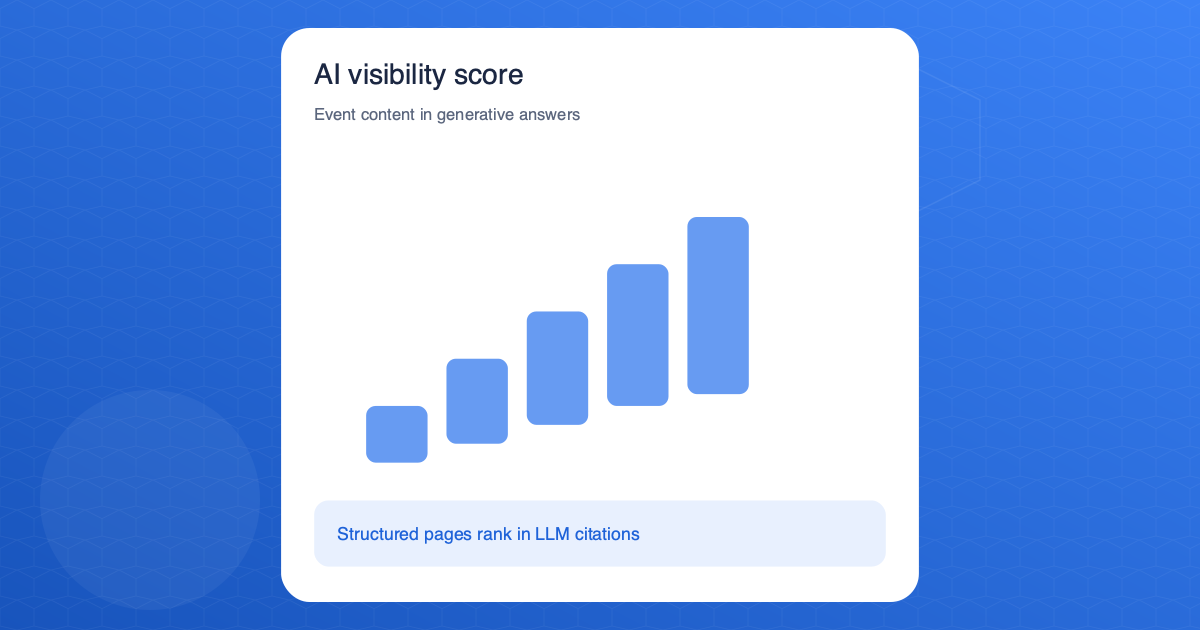
A GEO strategy for event teams is a structured approach to capturing and publishing the expert content your conferences, webinars, and podcasts already produce — so that AI search engines like ChatGPT, Perplexity, Google AI Overviews, and Claude cite your brand when buyers ask for recommendations. Most event teams don't realize they're sitting on the highest-value content type for AI visibility. They produce it, but they don't publish it in a way that LLMs can find.
The gap isn't content production. It's the connection between what your event team creates and what AI systems actually cite. While marketing teams scramble to reverse-engineer AI search from scratch, event teams are already generating the exact content that ranks — and most of them have no idea.
Generative Engine Optimization is the practice of optimizing content so it appears as a cited source in AI-generated responses. When a buyer asks ChatGPT, "What's the best platform for managing conference speakers?" or Perplexity, "how do I build a year-round speaker pipeline?", the AI synthesizes dozens of sources and returns a curated answer — often without the buyer ever clicking through to a website. GEO is about being the source that the AI trusts enough to include.
You might also hear this called Answer Engine Optimization, or AEO — the terms describe the same thing: how do you show up in LLMs as an answer? Whether you call it GEO or AEO, the underlying mechanics are the same, and the implications for event teams are significant.
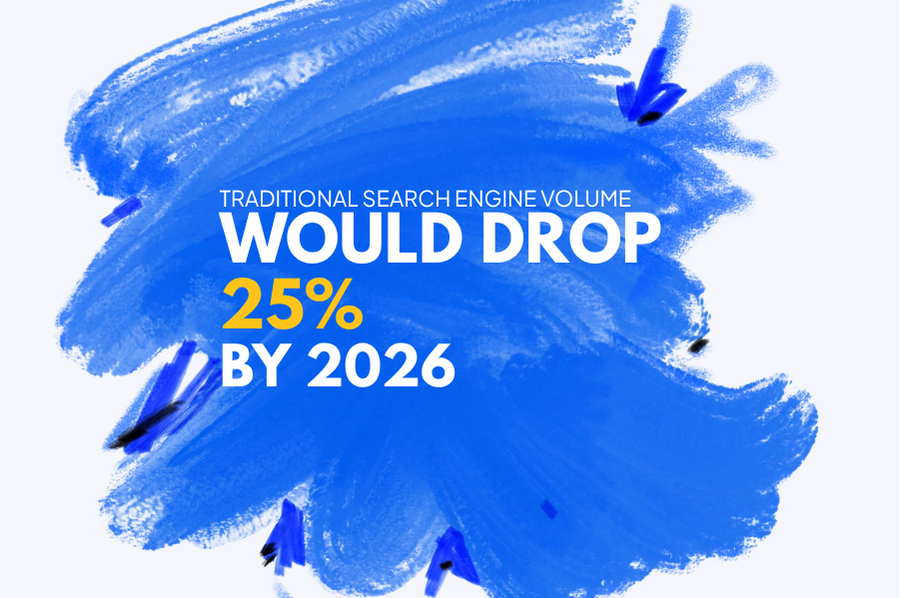
This matters because the buyer journey is compressing. Gartner predicted that traditional search engine volume would drop 25% by 2026, and we're living in that reality. 93% of Google AI Mode searches now end without a single click. But the traffic that does come through converts at dramatically higher rates. Semrush reported a 4.4x conversion advantage over organic search. Graphite's work with Webflow showed an even starker gap — a 6x difference in conversion rates between LLM traffic and Google Search traffic. The likely reason: buyers arriving through AI search have already had a multi-turn conversation, asked follow-ups, and narrowed their intent before they ever click.
For event teams, the implication is direct. The content you produce — speaker sessions, practitioner case studies, panel discussions, webinar recordings, podcast episodes — is precisely the kind of content AI search engines are learning to prioritize. The question is whether you're capturing and publishing it in a way that makes it findable.
There's a common assumption that publishing enough blog posts and optimizing for keywords will get you into AI-generated answers. The citation data tells a different story.
Semrush analyzed 325,000 unique prompts across ChatGPT Search, Google AI Mode, and Perplexity in early 2026. The findings challenge conventional content strategy thinking. Reddit is the most-cited source across all three major AI platforms. LinkedIn is second — cited in 14.3% of ChatGPT Search responses and 13.5% of Google AI Mode responses. That puts LinkedIn ahead of Wikipedia, YouTube, and every major news publisher in the study. YouTube, G2, Quora, and niche community forums round out the top sources.
The pattern is clear: LLMs are not prioritizing polished marketing content. They're prioritizing real people sharing real perspectives, opinions, and expertise in their own voice.
Princeton's research on Generative Engine Optimization found that adding statistics to content increases AI visibility by up to 40%, and including quotations from credible sources boosts visibility by up to 37%. Meanwhile, 96% of AI Overview citations come from sources with strong expertise, experience, authoritativeness, and trustworthiness signals (E-E-A-T). Content tied to identifiable experts — people with clearly defined credentials and consistent publishing histories — gets significantly more weight than anonymous or loosely attributed content.
There's a concept gaining traction in the AEO space called "information gain" — the idea that AI systems are increasingly able to distinguish between genuinely original thinking and content that just rephrases what already exists. The implication is that the majority of traditional marketing content — blog posts that summarize other blog posts — is losing ground to content that introduces original perspectives and first-party data. Event content does this by definition.
The alignment between what LLMs cite and what event teams produce isn't a coincidence. It's structural. Every tactic that drives AI visibility has a natural equivalent inside your event programs.
Named experts with real credentials. Every session, panel, keynote, webinar, and podcast episode is inherently expert-attributed content. Your speakers aren't anonymous brand accounts. They're practitioners with titles, companies, track records, and verifiable expertise. This is exactly the authority signal that LLMs weight most heavily — and it's the same reason speaker content is already the key to traditional SEO: Google's E-E-A-T framework rewards the same expert signals that LLMs are now learning to prioritize. The compounding effect matters too — a speaker who presents at your conference, then joins your podcast, then co-hosts a webinar creates a consistent, verifiable expert signal across multiple formats and platforms. LLMs recognize and reward that pattern.
Original insight, not derivative content. A practitioner explaining how they solved a specific problem at their company last quarter is qualitatively different from a blog post that summarizes five other blog posts about the same topic. Event content is original by nature. When a VP of Marketing shares the strategy that doubled their pipeline, or a CTO walks through the architecture decision that scaled their platform — that's first-party expertise that doesn't exist anywhere else on the internet until you publish it. Research from Graphite backs this up. Their analysis found that purely AI-generated content — automated, no human in the loop — does not perform in search. AI-assisted content edited by real experts does. The content itself needs to originate from someone with something new to say. This is why positioning speakers as year-round content assets can multiply your marketing ROI — the expert signal they carry is exactly what both traditional search and AI search are learning to reward. Event content already clears that bar.
Multimodal content as a byproduct. LLMs pull from text, video, audio, and image sources. Most marketing teams try to reverse-engineer multimodal content from scratch. Event teams produce it as a natural byproduct. A single conference session generates a video recording, a transcript, slides, social clips, and photos. A webinar produces an on-demand recording, screen shares, chat Q&A logs, and highlight reels. A podcast episode delivers audio, show notes, pull quotes, and social audiograms. YouTube alone is cited in 11.3% of ChatGPT responses and 11.1% of Perplexity responses. And for B2B specifically, the opportunity is wide open — most YouTube video content covers food, travel, and lifestyle. There are very few videos on niche B2B topics such as speaker management, event content strategy, or marketing operations. If you're publishing session recordings and webinar replays on YouTube for these specific, high-LTV keywords, you're filling a gap that almost no one else is filling.
Natural question-and-answer structure. The content format that performs best in AI search is a clear question followed by a concise, authoritative answer. That's literally what happens in every Q&A session after a conference talk, every time a podcast host asks "how did you actually do that?", and every time a webinar chat question gets a real-time expert response. Each of those moments is a ready-made snippet for AI retrieval.
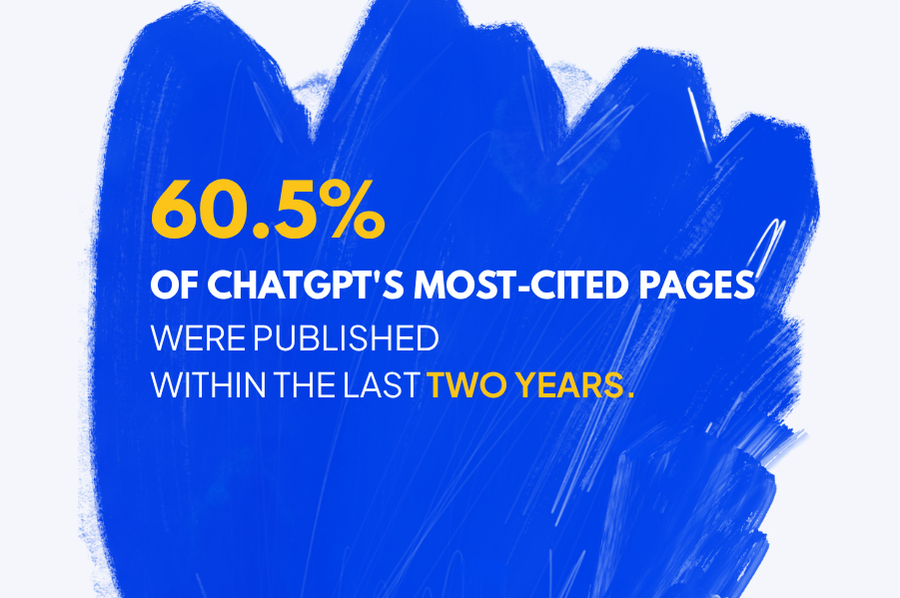
Freshness at scale. 60.5% of ChatGPT's most-cited pages were published within the last two years. A weekly podcast produces 50+ fresh, expert-attributed episodes per year. A monthly webinar series adds 12+ long-form assets. A conference with 30 sessions generates a burst of new, timely perspectives. Together, these programs create the continuous stream of fresh expert content that AI search rewards.
Most companies treat their conference, webinar series, and podcast as separate initiatives — often run by separate teams with separate goals. But from a GEO perspective, they form a single year-round expertise engine, each format filling a different gap in what AI search needs to see.
Conferences and live events happen one to four times per year, and they're the big bursts. A two-day conference with 30 sessions can generate transcripts, video clips, recap articles, speaker quotes, social threads, and LinkedIn articles from every single talk. The sheer volume of expert-attributed, original content from one event can feed your GEO pipeline for months. Conferences also establish your brand's convening authority — the signal that your company is where the important conversations in your category happen.
Webinar series — monthly or biweekly — fill the gaps between events. They keep the stream of fresh expert content flowing, which is critical for maintaining AI visibility. A monthly webinar with a different practitioner each time creates 12+ pieces of substantive, long-form content per year, each with its own transcript, recording, Q&A, and derivative assets. Webinars also let you go deeper on specific topics than a 30-minute conference session allows.
Podcasts are the most consistent signal generator. A weekly podcast adds 50+ episodes per year — every one indexed by its audio platform, transcribed, and searchable. Podcasts also create the longest-running relationship with your expert network. A guest who appears quarterly becomes a recurring authority signal tied to your brand.
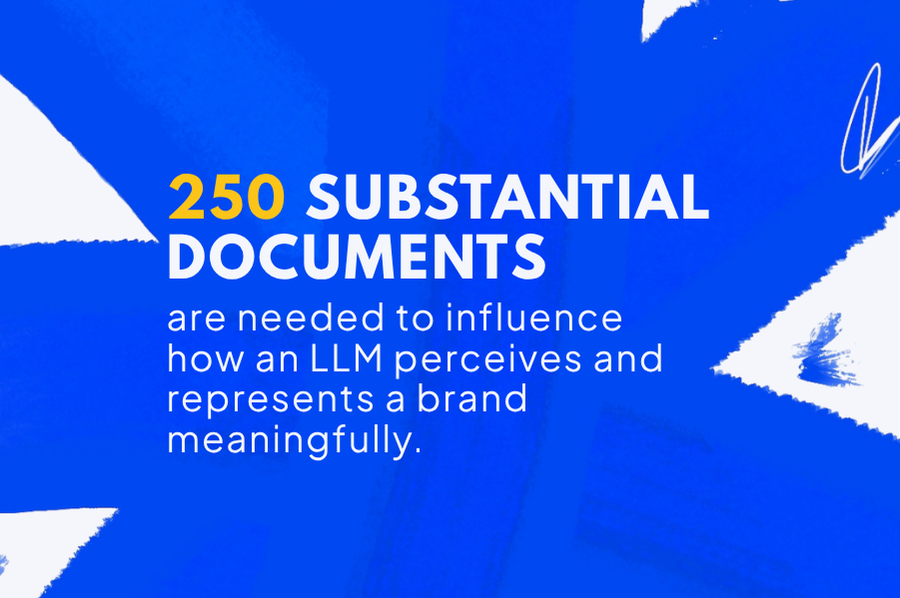
The math on volume matters here. Research suggests that roughly 250 substantial documents are needed to influence how an LLM perceives and represents a brand meaningfully. One coordinated year of programming across these three formats — a 30-session conference (100+ pieces), 12 webinars (50+ pieces), and 50 podcast episodes (100+ pieces) — exceeds 250 without a single traditional blog post.
Raw event content — a 45-minute session recording, a full webinar replay — isn't in a format LLMs can easily cite. The transformation isn't about simplifying it. It's about extracting and structuring the expert insights in formats that AI search can retrieve.
From every session, webinar, or podcast episode, extract key quotes with full attribution. "According to [Name], [Title] at [Company], '[specific insight].'" This is the format LLMs cite most readily. Aim for three to five quotable insights per piece of content. Extract question-and-answer pairs by reformulating key insights as specific questions with direct answers — this mirrors how buyers query AI assistants. Pull out data points and specific examples, as adding statistics can increase AI visibility by up to 40%. And surface contrarian or distinctive takes, because LLMs are learning to prioritize original perspectives over consensus views.
This structuring work matters more than most teams realize because of how differently people query AI versus traditional search. The average AI chat prompt is around 25 words, compared to roughly 6 words for a Google search (Perplexity data). The long tail of questions people ask in AI chat is significantly larger, and many of these queries have never been searched before in traditional engines. Your event Q&A sessions, webinar chat logs, and podcast interview questions are already generating these long-tail, specific queries. They just need to be structured and published.
Creating the structured content isn't enough. It needs to live in the places where AI systems are actually looking.
On your own website, publish full transcripts as long-form blog posts with clear H2/H3 headings that mirror buyer queries. Include speaker credentials prominently — name, title, company, and a brief bio. Front-load the answer in the first 40–60 words under each heading, and include 8–10 FAQ questions at the bottom of comprehensive posts.
On LinkedIn, publish speaker insights as articles — 500-2,000 words perform best — and encourage speakers to share their own perspectives on their personal profiles. Mid-length posts of 50–299 words account for the largest share of post-level citations. LinkedIn is cited in 14.3% of ChatGPT responses; this is not optional.
On YouTube, upload session recordings, webinar replays, and podcast episodes with detailed descriptions and full transcripts as captions. Use specific, descriptive titles that match how buyers actually phrase their questions.
On Reddit and niche communities, the strategy is straightforward but requires authenticity. Have real people — your speakers, your practitioners, your team — go to relevant threads, say who they are, say where they work, and give a genuinely useful answer. You don't need thousands of comments; even a handful of thoughtful, expert responses in the right threads can generate citation signals. Reddit's community polices quality aggressively, which is precisely why LLMs trust it — and why authentic expert participation carries outsized weight compared to automated outreach.
Here's where most companies get stuck. They have the events, the webinar program, and maybe a podcast. But the experts — the speakers, the practitioners, the industry voices who make all of this content credible — are scattered across spreadsheets, email threads, personal relationships, and the institutional memory of whoever organized last year's conference.
The real unlock for a GEO-driven content strategy isn't just producing more content. It's building and maintaining a searchable, organized ecosystem of subject matter experts who serve as a contextual layer across every marketing activation — events, webinars, podcasts, blog posts, case studies, and everything else.
An effective SME ecosystem lets you find the right expert for any topic fast — searchable by expertise, industry, company size, past topics, and speaking history. It lets you track engagement and history across programs, so you can see that the expert who killed it at your conference is also the perfect candidate for a follow-up podcast episode. And it lets you activate experts across multiple content formats, creating the compound authority signal that LLMs reward.
This is what a purpose-built speaker and content management platform is designed to do. Your sales CRM thinks about people as leads, not experts. Your event registration platform is scoped to individual events with no cross-program continuity. What you need is a living, searchable database of your SMEs organized by what they know, not where they are in a deal cycle.
Sessionboard's Speaker CRM does exactly this — it maintains a persistent, searchable view of your expert network across years and formats, organized by topic, expertise, industry, and speaking history. You can filter by any of these dimensions to find the right expert for any content need, track their contributions across every program, and connect it all to your existing workflow through integrations with platforms like Cvent, Swoogo, ON24, and WordPress. Instead of experts being trapped inside individual event instances, they become a persistent, accessible layer that your entire marketing organization can draw from for every activation, year-round.
Event teams can't execute a GEO strategy on their own. The final piece is connecting event-driven content to the broader marketing and GEO effort.
Establish a content handoff process that defines who transforms raw event content— recordings and transcripts—into structured, GEO-optimized assets. Determine the publishing cadence and channels: who posts what, where, and when. And set up tracking to measure which expert content is appearing in AI search results.
A useful framework is to break citation strategy into two groups: onsite and offsite. On-site means creating landing pages and structured content on your own domain that answers the specific questions buyers are asking. Offsite means showing up in the places LLMs pull citations from — YouTube, Reddit, LinkedIn, industry publications, and review platforms. Event content feeds both sides naturally: transcripts and recaps for onsite, speaker clips and expert posts for offsite.
On measurement, the emerging metric is "share of voice" for AI search — the percentage of time your brand shows up across AI surfaces for your target questions. Unlike traditional SEO, where you either rank or you don't, AI answers vary with each query and across each platform. Answer tracking tools (the AEO equivalent of keyword tracking) let you monitor this over time. Run controlled experiments: track a set of target questions, intervene on half with new content, and compare results against the control group after a few weeks. AI answers show meaningful variance even without intervention, so a control group is essential.
One important nuance for event teams: AI search traffic often doesn't show up in traditional analytics. Buyers frequently open a new tab after seeing a brand mentioned in an AI response and type the domain directly — which shows up as "direct traffic" — or search the brand name in Google, which shows up as "branded search." If you're only measuring last-touch referral traffic from ChatGPT or Perplexity, you're significantly undercounting the impact.
The companies that will win in AI search aren't the ones with the most content. They're the ones with the most credible voices saying specific things in public — consistently, across multiple formats, all year long.
AI search isn't replacing traditional search — Google's share of the pie stays roughly the same, but the pie keeps growing. What's new is a high-intent layer on top. And unlike traditional SEO, where building domain authority takes years, AI citations can happen fast. A mention on a blog, a Reddit thread, a YouTube video — any of these can generate a citation signal within hours. The barrier to entry is lower than it ever was for SEO, which means the teams that move first on this have a real window of advantage.
Your marketing team is trying to figure out GEO. Your event team, your webinar team, and your podcast team are already producing the raw material for it. The gap isn't content production — it's connecting those programs into a unified expertise and authority strategy, with the right SME ecosystem, workflows, and tools to make it sustainable.
The buyer's AI research assistant is already writing shortlists, building evaluation frameworks, and making recommendations. The question is whether your experts' voices are part of that conversation.
Managing speakers and sessions across your event programs? Sessionboard's Speaker CRM keeps your expert network searchable and connected — from the conference stage to the podcast mic. [See how it works →]
Traditional SEO focuses on ranking in a list of blue links for specific keywords. GEO focuses on being cited as a trusted source for AI-generated answers. The key difference is that ranking first in citations doesn't necessarily mean you "win" the answer — LLMs summarize many citations, so you need to be mentioned as many times as possible across different sources. Event content naturally creates these multiple citation signals across different formats and platforms.
Content that combines expert attribution, original data, and a clear question-and-answer structure performs best. Specifically: speaker quotes with full credentials, session Q&A pairs reformulated as standalone answers, practitioner case studies with specific metrics, and podcast interviews where experts share first-party insights. The content needs to be published as indexable text — not locked behind a registration wall or embedded only in video.
Research from Search Engine Land and ALM Corp suggests roughly 250 substantial documents are needed to influence how an LLM perceives and represents a brand meaningfully. A coordinated year of event programming — one conference (100+ derivative pieces), 12 webinars (50+ pieces), and 50 podcast episodes (100+ pieces) — can exceed that threshold without a single traditional blog post.
Research from Graphite found that purely AI-generated content — automated, with no human in the loop — does not perform well in either traditional search or AI search. AI-assisted content that is edited and enriched by real experts does perform. For event teams, this is good news: your content is inherently human-generated, expert-attributed, and original. That's exactly what AI systems are learning to prioritize over derivative, AI-generated alternatives.
LinkedIn is the second most-cited domain across major AI search platforms — appearing in 14.3% of ChatGPT Search responses and 13.5% of Google AI Mode responses. That puts it ahead of Wikipedia, YouTube, and every major news publisher. When your speakers publish their session takeaways, practitioner insights, and expert perspectives on LinkedIn, they're contributing directly to your brand's AI visibility in a way that few other channels can match.
Traditional last-touch analytics significantly undercount the impact of AI search because buyers often type your domain directly or search for your brand name after seeing it in an AI response. Use dedicated answer tracking tools to monitor your share of voice across ChatGPT, Perplexity, Claude, and Google AI Overviews. Run controlled experiments — track a set of target questions, intervene on half with new content, and compare results against the control group after a few weeks. And ask buyers in post-conversion surveys how they first heard about you.
Yes — and this is one of the most important differences between GEO and traditional SEO. Traditional SEO requires years of building domain authority, which is why early-stage companies are often advised to skip it. AI search works differently: you can get cited tomorrow by being mentioned on a blog, in a Reddit thread, or in a YouTube video. Running even a small webinar series or podcast with credible practitioners creates immediate citation opportunities without the domain authority prerequisite.
A sales CRM like Salesforce or HubSpot tracks people as leads through a buying journey — it doesn't know what topics someone has spoken about, how audiences rated their sessions, or what their specific expertise is. A Speaker CRM like Sessionboard organizes experts by what they know: topic, expertise, industry, and speaking history. This makes it possible to find and activate the right expert for any content quickly needed across your full program — conferences, webinars, podcasts, blog posts — which is essential for building the kind of consistent, cross-format expert signal that AI search rewards.
Sources:
.png)

Stay up to date with our latest news
See how real teams simplify speaker management, scale content operations, and run smoother events with Sessionboard.
